
| Date | Slides | Week and topic | Homework and logistics |
|---|---|---|---|
| 9/3 |
Week주차 1
Appendix — old paradigm vs. new: plan-driven/UML-heavy SE vs. product-based/agile/cloud SE
Appendix — old paradigm vs. new: plan-driven/UML-heavy SE vs. product-based/agile/cloud SE
📖 ESP Appendix + old 10th ed. for contrast | Course logistics, AI tool policy intro
HW과제 → | |
| 9/10 |
Week주차 2
Git & GitHub (Classroom50 setup), language review, team formation
Git & GitHub (Classroom50 setup), language review, team formation
📖 Online Git & GitHub guides | Idea pitched, stack chosen, team formation (solo or teams of 2-3); vibe-coded MVP assigned, due Wk2
HW과제 → | |
| 9/17 |
Week주차 3
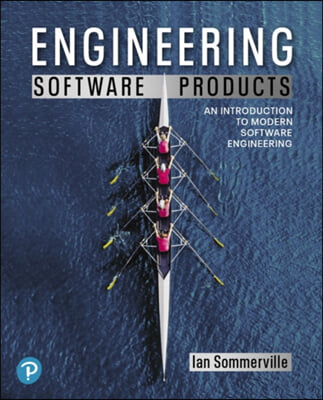
Ch.1 Software Products (vision, product mgmt, prototyping)
Ch.1 Software Products (vision, product mgmt, prototyping)
📖 Chp 1 | Vibe-coded MVP due + product vision statement
| |
| 9/24🔴 No Class휴강 |
No Class Chuseok!~
No Class Chuseok!~
| ||
| 10/1 |
Week주차 4
Ch.2 Agile SW Engineering (Agile methods, XP, Scrum)
Ch.2 Agile SW Engineering (Agile methods, XP, Scrum)
📖 Chp 2 (+ SWE@Google team-culture, optional) | Retrofit lightweight Scrum/Kanban
| |
| 10/8 |
Week주차 5
Ch.3 Features, Scenarios and Stories
Ch.3 Features, Scenarios and Stories
📖 Chp 3 | Retrofit personas & user stories onto the MVP
| |
| 10/15 |
Week주차 6
Ch.4 Software Architecture
Ch.4 Software Architecture
📖 Chp 4 | Architecture diagram + critique
| |
| 10/22📝 Exam시험 |
Midterm Test Midterm Test | ||
| 10/29 |
Week주차 7
Ch.5 Cloud-based Software
Ch.5 Cloud-based Software
📖 Chp 5 | Redeploy properly; midterm review
| |
| 11/5 |
Week주차 8
Ch.6 Microservices Architecture
Ch.6 Microservices Architecture
📖 Chp 6 | Apply only if it fits the project's scope — good critical-thinking angle on over-engineering
| |
| 11/12 |
Week주차 9
Ch.7 Security and Privacy
Ch.7 Security and Privacy
📖 Chp 7 | Security audit
| |
| 11/19 |
Week주차 10
Ch.8 Reliable Programming + Style Guides
Ch.8 Reliable Programming + Style Guides
📖 Chp 8 + SWE@Google Ch.8 | Code style pass
| |
| 11/26 |
Week주차 11
Ch.9 Testing + Code Review
Ch.9 Testing + Code Review
📖 Chp 9 + SWE@Google Ch.9 | Real test suite + peer code review
| |
| 12/3 |
Week주차 12
Ch.10 DevOps and Code Management + Documentation
Ch.10 DevOps and Code Management + Documentation
📖 Chp 10 + SWE@Google Ch.10 | README, API docs, ADRs, CI setup
| |
| 12/10📝 Exam시험 |
Licensing & AI-authorship discussion; final polish
Licensing & AI-authorship discussion; final polish
Presentation rehearsal
| ||
| 12/17📝 Exam시험 |
Final Test Final Test | ||
- No formal prerequisites. Curiosity required. 공식 선수 과목 없음. 호기심 필수.
교육목표: 최신 소프트웨어 공학 방법론을 심도 있게 다루고, 이를 실제 프로젝트에 적용할 수 있는 역량을 함양함 주요내용: 요구공학, 소프트웨어 아키텍처 패턴, DevOps/CI-CD, 테스팅 및 품질보증, 소프트웨어 진화·유지보수, LLM 기반 코드 생성/리뷰 등 AI 활용 소프트웨어공학 교수법·평가: 논문 리딩 세미나 및 사례연구 병행, 팀 프로젝트 및 발표, 중간·기말 평가
Course Objectives: To provide an in-depth understanding of modern software engineering methodologies and to develop the ability to apply them in real-world projects. Key Topics: Requirements engineering, software architecture patterns, DevOps/CI-CD, testing and quality assurance, software evolution and maintenance, AI-assisted software engineering including LLM-based code generation and review. Course Methodology and Assessment: The course will combine paper reading seminars and case studies, with team projects and presentations, along with midterm and final evaluations.
Grading:
| Attendance | 10% |
| Weekly Build Log & Labs | 20% |
| Semester Project (before/after report + presentation + code walkthrough) | 40% |
| Midterm | 20% |
| Final Exam | 10% |
Software Engineering at Google (free online) slots in well as optional companion reading for Weeks 9–14 — its chapters on code review, testing culture, and technical debt map closely onto what students will be discovering in their own project by then.


Aaron Snowberger earned his Ph.D. in Information and Communications Engineering from Hanbat National University in South Korea in 2023. He also holds degrees in Computer Science and Media Design. He has taught technology courses for over 8 years, English for over 15 years, and has freelanced as a web developer and magazine designer for over 5 years. His current research interests include computer vision, natural language processing, image processing, signal processing, and machine learning.
Aaron Snowberger는 2023년 한국 한밭대학교에서 정보통신공학 박사 학위를 취득했습니다. 그는 또한 컴퓨터 과학 및 미디어 디자인 학위를 취득했습니다. 그는 8년 이상 기술 과정을 가르쳤고, 15년 이상 영어를 가르쳤으며, 5년 이상 웹 개발자 및 잡지 디자이너로 프리랜서로 일했습니다. 현재 연구 관심사는 컴퓨터 비전, 자연어 처리, 영상 처리, 신호 처리, 기계 학습입니다.